Why AI Shopping Tools Miss Great Products (And How Clear Material Facts Help)
Many well-made goods lose out online simply because key details—alloy purity, fabric weight, hide grade, origin, and repair coverage—are trapped in photos or buried in PDFs. Here is how clear product facts help both buyers and modern search tools recognize real quality.
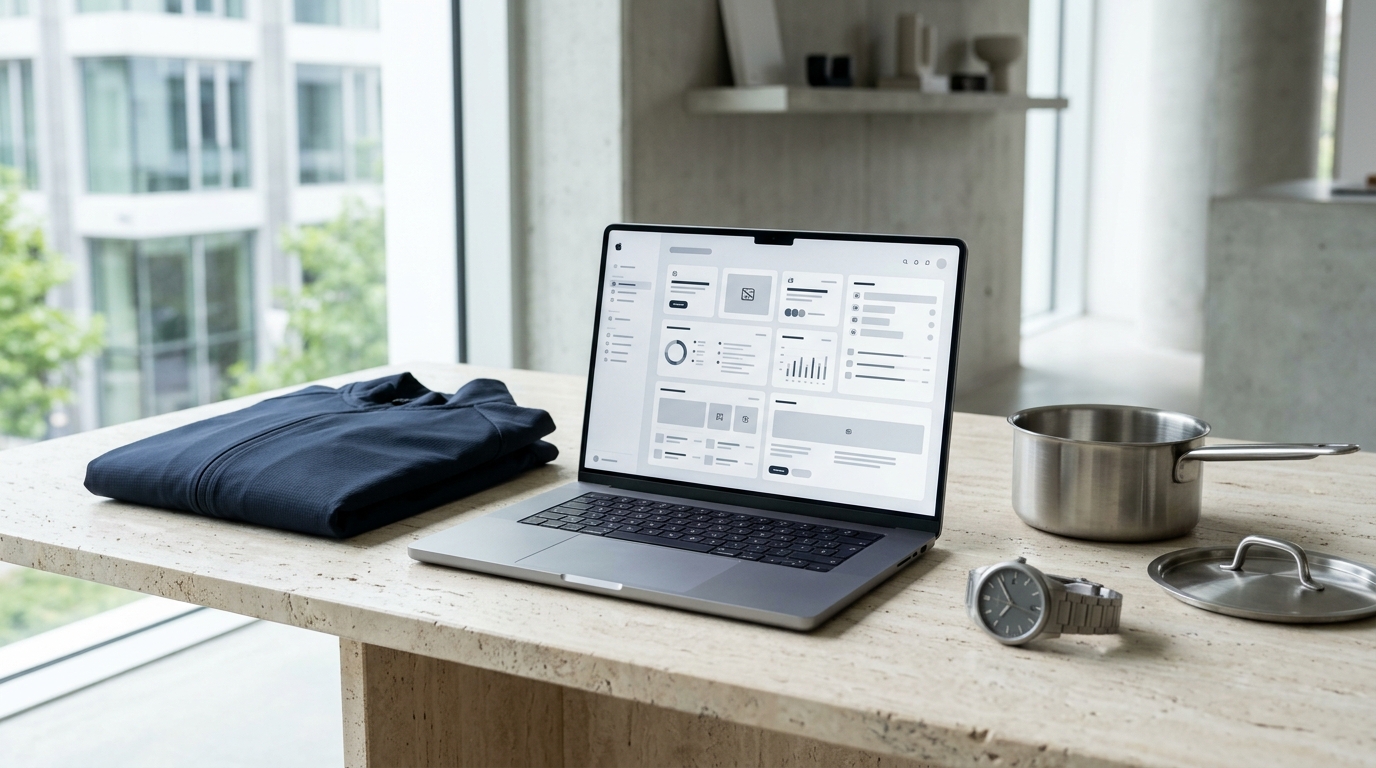
Suppose you ask Google or an AI assistant for a tri-ply stainless cookware pan made in Pennsylvania—or a 100% merino coat, an aluminum carry-on, or a sapphire-crystal field watch backed by a real repair warranty. Even if an ecommerce brand builds the exact product you want, that listing often gets skipped—not because the product falls short, but because the important specs live inside lifestyle banners, image captions, or downloadable PDFs.
Shoppers can squint at a product photo or email customer support. Automated search engines and AI assistants usually cannot. Making your core product facts plain and well-labeled solves that disconnect for everyone.
Where Traditional Online Stores Lose Their Best Selling Points
Most ecommerce templates are built to highlight price, shipping speed, and star reviews. The details that actually justify spending more on better-built products—material grade, construction method, country of origin, and repairability—rarely get dedicated fields.
When '18/10 clad stainless core', '320 GSM heavyweight merino', and 'full-grain leather' are scattered across marketing blurbs instead of clean, labeled specs, comparison engines lump high-grade products together with cheaper imitations.
The Six Product Facts Worth Putting Front and Center
Whether you are launching a new product page or cleaning up an existing catalog, shoppers and search engines look for six concrete details:
- Exact materials and grades: multi-ply 18/10 stainless steel versus coated aluminum; full-grain leather versus split hide; long-staple wool or linen versus synthetic blends; solid hardwood versus engineered core.
- How it is built: clad bonding, double-needle stitching, Goodyear welt construction, rivet or fastener type, and surface finish.
- Where it was made: country plus city or named manufacturing facility when available.
- Warranty and repair options: how long coverage runs, what parts can be serviced, and whether replacement parts exist.
- Clear return terms: exact return window and shipping expectations.
- Consistent product identifiers: brand name, SKU, and barcode/GTIN so comparisons never mix up models.
How Machine-Readable Product Labels Work Behind the Scenes
On top of clear page copy for human readers, sites can include a lightweight background label called Schema.org JSON-LD. Think of it like a nutrition label for search crawlers: it repeats your visible material, origin, and warranty facts in tidy key-value lines so software never has to guess.
For Shopify or custom ecommerce teams, here is a clean, readable example for a clad stainless skillet (every value should match what shoppers actually see on the page):
{
  "@context": "https://schema.org",
  "@type": "Product",
  "name": "Allegheny 12-Inch Tri-Ply Clad Skillet",
  "brand": { "@type": "Brand", "name": "Keystone Cookware Co." },
  "material": "304 (18/10) Stainless Steel, Aluminum Thermal Core, Cast Stainless Handle",
  "countryOfOrigin": { "@type": "Country", "name": "United States" },
  "additionalProperty": [
    { "@type": "PropertyValue", "name": "Construction", "value": "3-ply bonded clad body; riveted stay-cool handle" },
    { "@type": "PropertyValue", "name": "Origin Facility", "value": "Pittsburgh, Pennsylvania" }
  ],
  "offers": {
    "@type": "Offer",
    "priceCurrency": "USD",
    "price": "195.00",
    "warranty": {
      "@type": "WarrantyPromise",
      "durationOfWarranty": { "@type": "QuantitativeValue", "value": 25, "unitCode": "ANN" },
      "warrantyScope": "Clad bonding, rim integrity, and rivet hardware"
    }
  }
}
Pairing Clear Specs With Independent Proof
Clean labels help search tools read what a store claims, though anyone can type 'heirloom quality' into a web page. That is why third-party verification matters alongside good page hygiene.
Brands that want an effortless way to display verified material breakdowns and automatic structured labels on Shopify, WooCommerce, or custom storefronts can use our lightweight Quality Widget on our free Basics plan—giving both shoppers and search crawlers independently checked TruScore facts in one place.