Full-Grain vs. Top-Grain vs. Bonded Leather: How to Spot Real Quality Before You Buy
Most leather listings hide critical hide, tanning, and hardware details behind the phrase 'genuine leather.' Here is a plain-English guide to how each leather grade ages over years of real use—and what to check before spending on a bag, belt, jacket, or pair of boots.
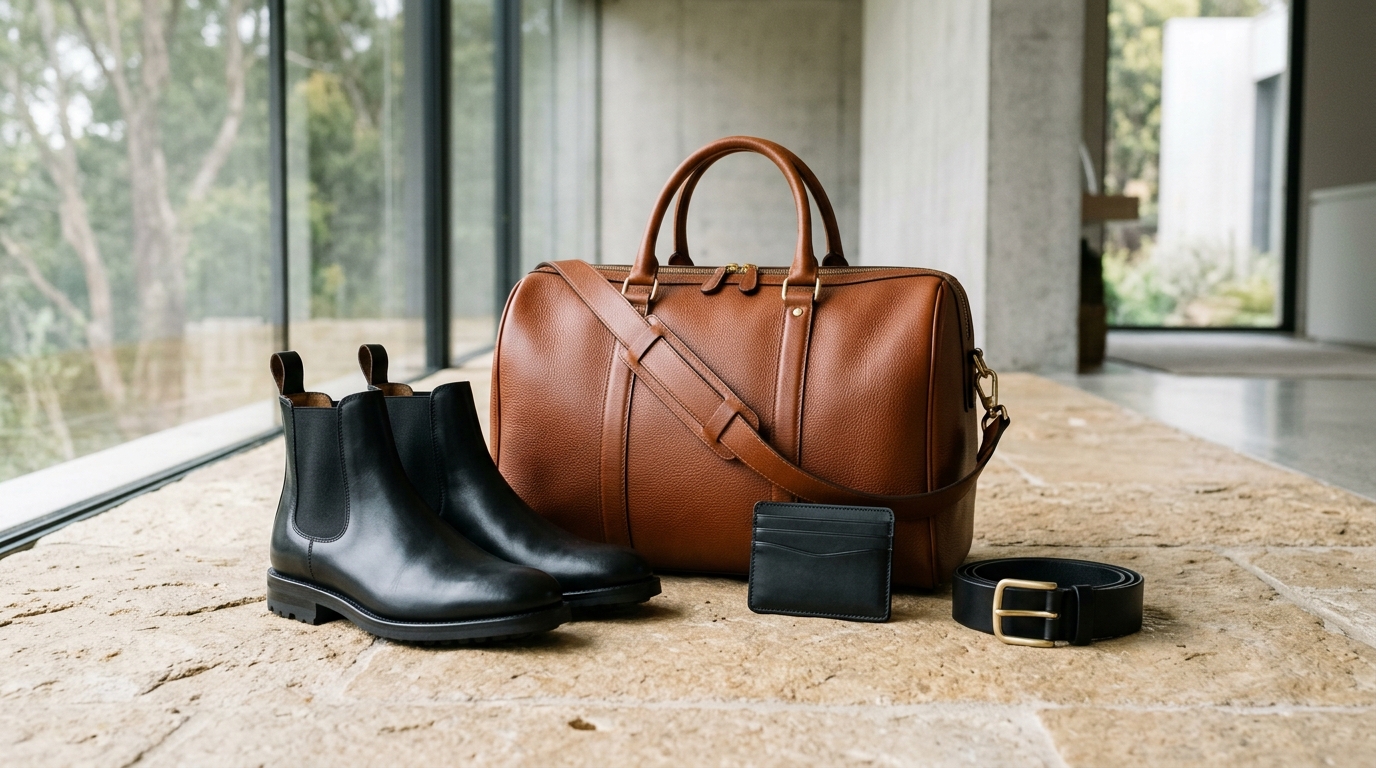
Whether you are buying an everyday belt, a travel duffel, leather boots, or a tailored jacket, few labels confuse shoppers more than '100% genuine leather.' On paper it sounds like a guarantee of heirloom quality. In practice, it legally covers everything from thick, lifelong saddle hides to shredded leather scraps bonded with plastic glue.
Understanding four basic hide terms—plus two quick checks on stitching and metal hardware—makes it obvious which pieces will wear in beautifully for twenty years and which ones will crack after one season.
Full-Grain, Top-Grain, Split, and Bonded Leather Explained
Animal hide is thick and layered. The strongest, tightest collagen fibers sit at the very top outer surface; deeper layers grow looser and softer. Leather makers cut and finish those layers differently depending on durability goals and budget:
- Full-grain leather: uses the intact outer surface of the hide without sanding away natural grain. It resists tearing, breathes well, and develops a rich protective patina over decades—making it the gold standard for belts, boots, watch straps, and heirloom bags.
- Top-grain leather: lightly sanded or buffed to smooth out scars and coated with a thin protective finish. It feels supple right out of the box and wears evenly, though slightly thinner in surface strength than unbuffed full-grain.
- Split or suede leather: comes from the softer lower layer left after the outer grain is sliced off. Great for soft linings and casual suede shoes, less ideal for heavy straps or load-bearing handles.
- Bonded leather (and PU-coated split): leftover leather pulp glued onto fabric backing and embossed with fake grain texture. Prone to peeling and cracking along flex lines—especially frustrating when sold at mid-to-high retail prices.
Tanning Methods: Vegetable-Tanned vs. Chrome-Tanned
Once cut, hides are preserved using either plant tannins or mineral salts. Vegetable-tanned leather uses tree bark and natural tannins over several weeks—creating firm edges that burnish cleanly and darken gracefully with sunlight and hand oils.
Chrome-tanned leather is softer, water-resistant, and quicker to break in, making it great for supple jackets and travel bags. Just watch out for heavy plastic surface paints hiding low-grade split hides underneath.
Don't Forget Stitching and Buckles
Even great leather fails early if corners are cut on assembly. Two quick checks save most returns:
- Stitching: heavy waxed thread with neat back-tacking at strap anchors (or two-needle saddle stitching on small goods) prevents seams from unzipping if a single thread wears through.
- Hardware: solid cast brass or stainless steel buckles age without snapping, whereas lightweight zinc-alloy ('pot metal') castings often fracture under tension once thin plating wears off.
Quick buying rule: if a listing charges $300+ for leather but only says 'genuine leather' without naming full-grain or top-grain hide, keep checking before you buy.
Checking Leather Listings Automatically While Shopping
If you want a second set of eyes while browsing online stores, our free Chrome Extension inspects listed leather grades, stitch specs, origin disclosures, and warranty clarity right on the product page—grounded in our published verification standards and TruScore methodology.