ChatGPT Business Profiles: What the Blue Check Means for Shoppers (and What It Leaves Out)
OpenAI opened Businesses in ChatGPT in November 2026, letting brands claim verified profiles and share product feeds. Here is what that blue badge actually tells buyers—and the quality details shoppers still have to check for themselves.
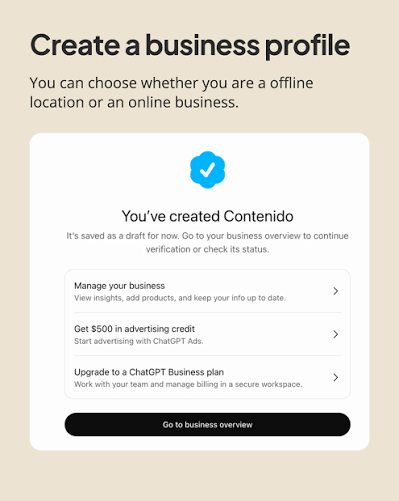
More people now ask AI assistants where to buy everyday essentials—from cast-iron skillets and Goodyear-welted boots to merino coats and mechanical watches. On November 10, 2026, OpenAI launched Businesses in ChatGPT in beta, giving companies a way to claim an official profile, confirm return policies, and connect live pricing and stock feeds.
At first glance, a verified blue checkmark on a ChatGPT profile feels reassuring. Yet for shoppers comparing two stores—and for quality-focused brands trying to stand out against cheap lookalikes—the badge only proves who runs the business. It does not check what a product is actually made of or how long it will hold up.
What a Verified ChatGPT Business Profile Covers
OpenAI's Business Hub works like an official directory card inside ChatGPT. Once a company verifies domain ownership and completes an identity check through Persona, it can publish an accurate website link, brand summary, shipping terms, return window, and product feed with up-to-date prices.
Eligible US stores can also turn on a Business Agent—a dedicated chat thread that answers shoppers' policy or sizing questions using facts supplied directly by the merchant, then links back to the store's own checkout.
Why Identity Verification Is Not Quality Verification
Persona verification checks business registration and ID—it confirms you are buying from the real company rather than an impersonator. What it never inspects is build quality.
Two footwear or luggage brands can both carry a blue check on ChatGPT while selling completely different products: one stitching full-grain leather with replaceable soles and solid metal hardware, the other gluing thin plastic-coated split leather over hollow foam heels. Both profiles look equally official on screen.
A verified business profile confirms who owns the website. Independent material and construction records confirm whether the product is worth the price.
How Shoppers Can Read AI Product Answers Smarter
OpenAI notes openly that claiming a profile does not force ChatGPT to recommend a brand higher—and AI answers still pull from public product pages, independent reviews, and third-party guides. When you ask an assistant for durable buying recommendations, look past brand names for specific evidence:
- Ask for exact material grades rather than broad labels (full-grain leather instead of 'genuine leather'; 304 clad stainless steel instead of 'metallic finish'; 100% merino wool instead of 'wool blend').
- Check how an item is built—Goodyear-welted soles, full-tang forged steel, machined metal hardware, and solid-core construction outlast glued or snapped plastic shortcuts.
- Look for clear repair options, replacement parts, and named manufacturing locations rather than vague 'imported' footers.
What Online Brands Should Fix Alongside Their Profile
For legitimate ecommerce brands, claiming a ChatGPT Business profile is worthwhile housekeeping so customers get accurate return policies and pricing. Just do not stop at the profile dashboard.
Put concrete material grades, origin cities, and warranty coverage directly on your product pages in plain text. If you want shoppers—and AI crawlers landing on your site—to see independent proof behind those claims, our Quality Widget and free Brand Directory surface third-party TruScore ratings right beside the product details.